From Newsgroup: comp.sys.mac.system
On Fri, 18 Dec 2020 07:25:23 -0700, Ken Blake wrote:
On 12/17/2020 9:40 AM, David Taylor wrote:
On 17/12/2020 16:14, The Real Bev wrote:
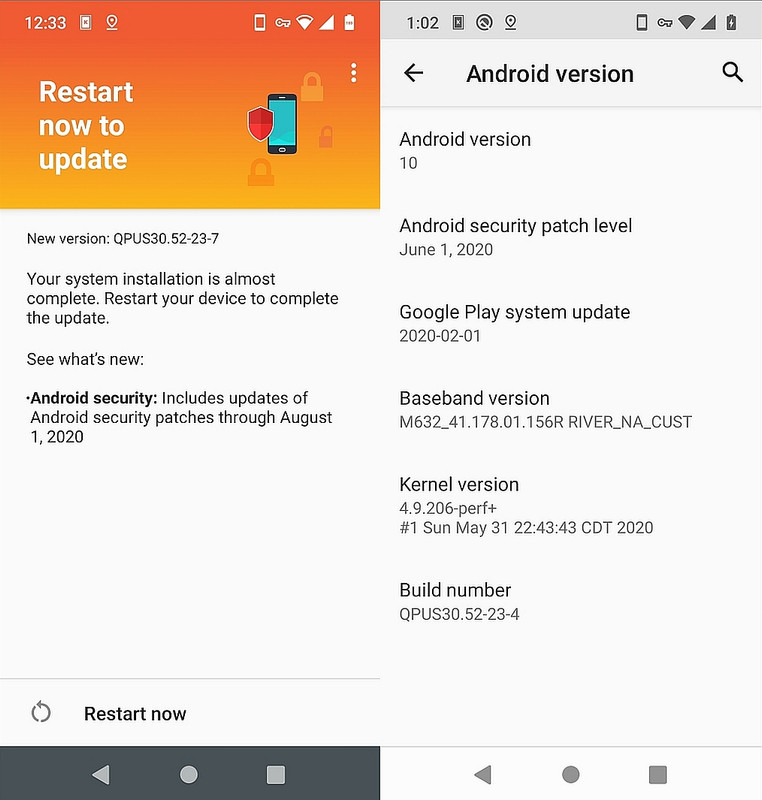
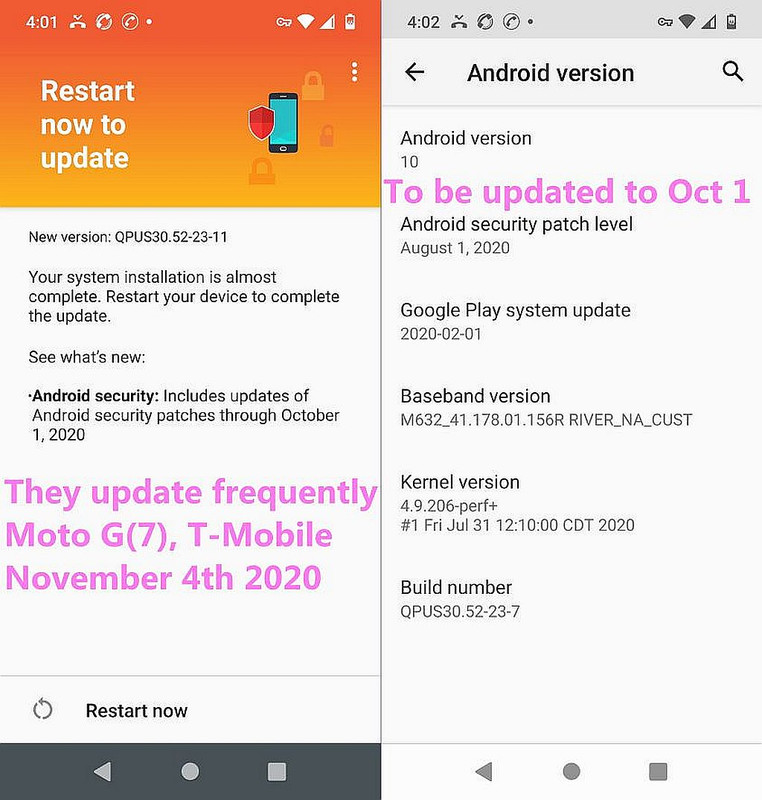
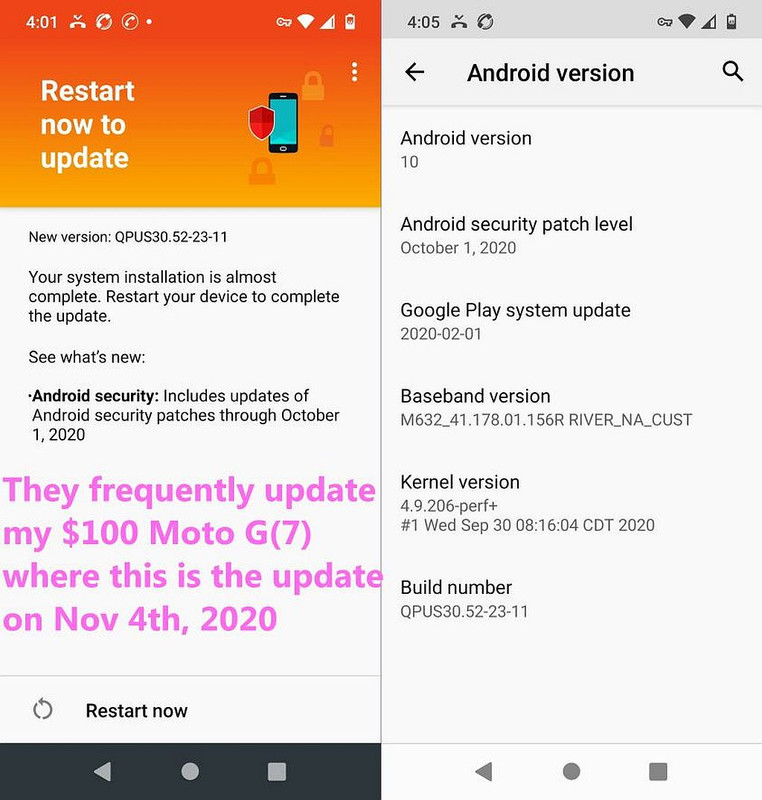
In general, I would rather have more frequent updates than less
frequent.
If the updates are improvements, I agree with you.
Always being rational, I agree fully that there's no reason to update most
of the time unless the update itself, has improvements you actually want.
To back up that claim, readers will note I asked here about whether it was
even worth the upgrade from Android 9 to 10, the answer being it's barely different.
o Those on Android 10... is it worth upgrading from 9 to 10? <
https://groups.google.com/forum/#!topic/comp.mobile.android/X65cMyzAn-g>
Being a logically reasonable person, I can't possibly disagree that the
mere frequency of updates, itself, imparts almost nothing of value itself.
What matters is _what_ is that update, which I note for those who aren't
aware of how Apple does updates quite differently than Android:
o When we talk of Android updates, what kinds of updates are we talking about? <
https://groups.google.com/forum/#!topic/comp.mobile.android/WaKaaPHM_Qs>
Note that Apple-only owners almost always (based on my experience with
them) have absolutely no clue about Android updates, perhaps for the reason that they believe only what MARKETING feeds them, whose marketing never
talks about the components of Android which _are_ updated frequently.
Also it's likely most Android owners perhaps don't know that an iOS update
is completely different than an Android update, in that Apple controls the entire supply chain save for the final push from the users' carrier.
o Why do some people say iOS is "safer" than Android simply because of the mere frequency of release?
<
https://groups.google.com/forum/#!topic/comp.mobile.android/voFbGKpUoBo>
If the updates are fixes to bugs, I disagree. Frequent fixes to bugs
mean there were frequent bugs. And frequent bugs means they have done a
poor job of testing updates and releasing them too quickly.
I agree with your logic, where rational thought processes should prevail in
our decision to update and in understanding why the OEM feels the need to update. Just updating because MARKETING needs you to update, is
preposterous.
Yet, many people do just that, simply following their MARKETING nose rings.
o These people actually believe the mere frequency of release garners safety.
Me? I don't update anything (Windows, Linux, Android, or iOS) until/unless
I read there is _something_ of value in that update, or if I'm forced to.
I also own plenty of iOS devices, which I think Apple is forced to update
their bugs within days of each other, and even days after an initial
release, which has happened so many times that it's just not funny.
While many/most/some people wait for a release update to prove itself:
o Windows 10 update to 2004. Is it safe at this point? <
https://alt.comp.os.windows-10.narkive.com/sb7p4y3E/windows-10-update-to-2004-is-it-safe-at-this-point>
Others throw caution to the wind, and update whenever it's available:
o So the Win 10 2004 update was finally presented to my computer, I'm diving in!
<
https://alt.comp.os.windows-10.narkive.com/ZlIoOV1S/so-the-win-10-2004-update-was-finally-presented-to-my-computer-i-m-diving-in>
Which, personally, I think is just ignorance driving them to update
frequently as we already know almost EVERY release has bugs that aren't
found until people use them en masse, so most prudent people whom I know,
would logically and sensibly delay the release update for a feasible time.
o Question about delaying 2004 upgrade <
https://alt.comp.os.windows-10.narkive.com/Mh85snag/question-about-delaying-2004-upgrade>
Personally, I haven't heard of all that many Android releases that were bad
out of the box, but _plenty_ of iOS and Windows releases certainly were
horrid at release time.
o Had my first BSOD in quite a few years (Win 10 v2004) <
https://alt.comp.os.windows-10.narkive.com/wm3c9PeI/had-my-first-bsod-in-quite-a-few-years-win-10-v2004>
In fact, I doubt either iOS or Windows has _ever_ shipped a release that
didn't have holes in it so big you could drive a Mack truck through them.
o Has Apple ever released, in the entire history of the iPhone & iPad, a sufficiently tested iOS release?
<
https://groups.google.com/g/misc.phone.mobile.iphone/c/UN9NyYPPMEk>
o A zero-day vulnerability in iCloud and iTunes on Windows PCs allowed hackers to install ransomware undetected.
<
https://groups.google.com/g/alt.comp.freeware/c/hftPQAEZr_g>
BTW, Google & Qualcomm are (yet again) changing how they break up Android
into manageable components which are different for the firmware than for
the software (e.g., Qualcomm issues a lot of the changes to the firmware).
o Google and Qualcomm are working together for faster Android updates <
https://www.theverge.com/2020/12/17/22178833/google-qualcomm-snapdragon-888-faster-android-updates-four-years>
In summary, when people compare updates, many don't bring up the huge differences there are in the "parts" of an update - where it's clear as day that anyone who thinks they get something valuable merely by the sheer _frequency_ of the release, must be, IMHO, listening only to MARKETING.
Logically, you don't update unless there is a compelling reason to do so.
--
One bug.... and the entire untested core iOS house of cards falls down. <
https://groups.google.com/g/misc.phone.mobile.iphone/c/7Mc1sX9XISA>
Google asked "Was it really that easy?", to which the answer was "Yes".
Google proved iOS core code dating back to 1985 has _never_ been tested!
--- Synchronet 3.18b-Win32 NewsLink 1.113